Ferry vs Eurotunnel: Which Is Better for Crossing the English Channel?
Two routes, one stretch of water, and a decision that quietly shapes the first few hours of your holiday. The ferry and Eurotunnel's Le Shuttle both get you and your car from England to France, but they feel like entirely different journeys. Which one suits you comes down to four things: cost, speed, convenience and what you actually want from the crossing.
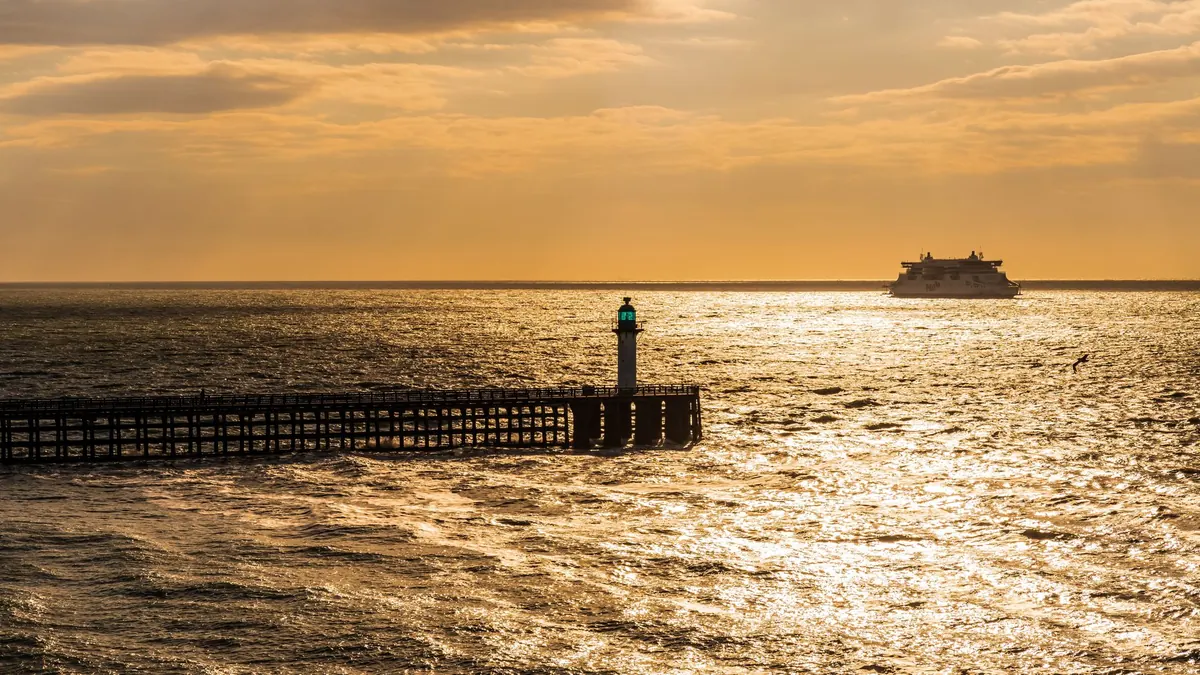
Ferry. You drive to a port — Dover, Newhaven, Portsmouth, Poole or Plymouth among them — board, sail, then drive off in France. Dover to Calais takes around 90 minutes at sea. The western routes to Normandy and Brittany take considerably longer, and overnight sailings are common.
Le Shuttle. Eurotunnel runs from Folkestone to Coquelles, near Calais. You stay in your vehicle for roughly 35 minutes and drive straight off at the other end. No sea, no restaurant, and no foot passenger option.
Both operate across the Dover Strait, so for many travellers the comparison is real rather than theoretical.
Neither is reliably cheaper. It depends on when you travel, how far ahead you book, and how many people and pets are in the car.
One structural difference is worth knowing. Le Shuttle prices per vehicle, so the fare looks much the same whether you're driving alone or with four passengers. Ferries often quote per vehicle on the short straits, but longer routes and some ticket types add a charge per passenger, which changes the sums for a family.
Compare like for like: total door-to-door cost including fuel, food on board and any overnight stop. A cheaper sailing that adds two hours of driving may not be cheaper at all. If you're bundling crossing and accommodation, a specialist agent can sometimes arrange both together — weigh that against booking directly, and read the cancellation terms before you pay.
Le Shuttle wins on paper at 35 minutes, and it usually wins in practice too. Arrive at the terminal, check in, and you'll normally be placed on the next available train. Elapsed time from terminal to French motorway is often around an hour and a half.
A Dover–Calais ferry takes about 90 minutes at sea, plus boarding and disembarkation, which is slower when the ship is full. Budget two and a half to three hours port to port. The longer western routes take four to six hours or more.
So the tunnel saves an hour or two on the short crossing. Whether that matters depends on your onward drive. If you're heading to Bruges or the Somme, the time saved is genuinely useful. If you're aiming for the Alps, a western ferry isn't a shortcut.
A night sailing from Portsmouth or Plymouth to Normandy, Brittany or northern Spain turns travel time into sleep and removes a hotel bill. There's no tunnel equivalent.
Two practical notes. Most operators ask you to check in 45 to 60 minutes before departure, and late arrivals may be moved to a later sailing for a fee. If you have an LPG conversion, an unusually large vehicle or an exotic pet, check the operator's rules before booking.
The ferry is the more memorable crossing. Standing on deck as Kent or Normandy slides away, coffee in hand, is a good way to start a trip. Cabins, restaurants and a bit of browsing on board help pass the time on longer routes. On a rough day, though, the same crossing can be miserable — if you're prone to seasickness, bring tablets and choose a seat low down and mid-ship.
Le Shuttle is quieter, quicker and far less romantic. You sit in your car, read or doze, and 35 minutes later you're in France. Some drivers love the efficiency. Others find it faintly odd — a car park that moves. For a family with a loaded boot and a long drive ahead, odd is perfectly acceptable.
Decide your route first, then your crossing. Work out where you need to be and by what time, then count backwards, allowing a buffer for traffic around Dover, Folkestone and Calais.
Get quotes for your exact dates from both operators and compare total journey time and cost, not just the headline fare. Book direct if you want straightforward changes; use an agent if you'd rather have one point of contact for crossing and accommodation. Check baggage, pet and vehicle rules carefully, and read the terms on amendments and refunds — weather, strikes and technical problems can all affect crossings, and it's much easier to be flexible in advance than to argue afterwards.
If the difference in cost is small, pick the crossing that makes the day easier. That's usually the right answer.
Photo: Valentin Onu / Pexels
Previous Post
How to Find Cheap Ferry Tickets to France: A Step-by-Step Guide
Next Post
First-Time Car Ferry Guide: What to Expect and How to Prepare