The iGaming Edge: How Smart Players Approach Casinos, Bets, and Bluffs

Let’s be honest: most people who open a casino app or log into a sportsbook are not thinking about long-term strategy. They’re chasing a feeling. And that’s fine—until the feeling starts chasing them. The difference between a casual player who enjoys the ride and a frustrated one who keeps reloading their balance is rarely luck. It’s approach.
iGaming has exploded into a $100 billion-plus global industry, with slots alone accounting for roughly 60% of casino revenue in many markets. But volume doesn’t equal value. If you want to actually enjoy this space—whether it’s spinning reels, betting on a Premier League match, or grinding a poker table—you need to think like an operator, not a mark. Here’s how.
Modern video slots are engineering marvels. They’re also mathematical traps if you don’t understand two numbers: RTP (Return to Player) and volatility. RTP is the theoretical percentage of all wagered money a slot pays back over millions of spins. A 96% RTP game keeps 4% for the house. That sounds small until you realize that 4% compounds brutally over time.
Volatility is the other half of the equation. High-volatility slots like Money Train 3 or San Quentin can go 500 spins without a meaningful win, then hit a 10,000x multiplier. Low-volatility games like Starburst pay smaller amounts more frequently. Neither is “better.” They serve different bankroll styles.
One concrete tip: many online casinos publish RTP ranges for the same game. Book of Dead might be 96.21% on one site and 94.25% on another. That 2% difference is huge over thousands of spins. Always check the help screen.
If you bet on sports without shopping lines, you’re leaving money on the table every single time. The same NFL spread can be -3 (-110) at one book and -2.5 (-105) at another. That half-point and five cents of juice matter. Professional bettors treat line shopping as non-negotiable.
Assume you bet $100 per game on 500 games a year. If you consistently get -105 instead of -110, you save roughly $250 annually—just from better odds. That’s not theoretical; that’s math.
Bankroll management is the other pillar. The classic advice is to risk 1-2% of your bankroll per bet. If you have a $1,000 bankroll, that’s $10-$20 per play. Why so small? Because even the best handicappers hit 55% winners. A 5% edge means nothing if you go 0-10 in a weekend and tap out.
Also, understand the difference between a good bet and a winning bet. A +150 underdog that loses can still be a good bet if the true probability was 45% (implied odds 40%). Results are noisy. Process is everything. kết quả bóng đá is another reliable resource on the subject.
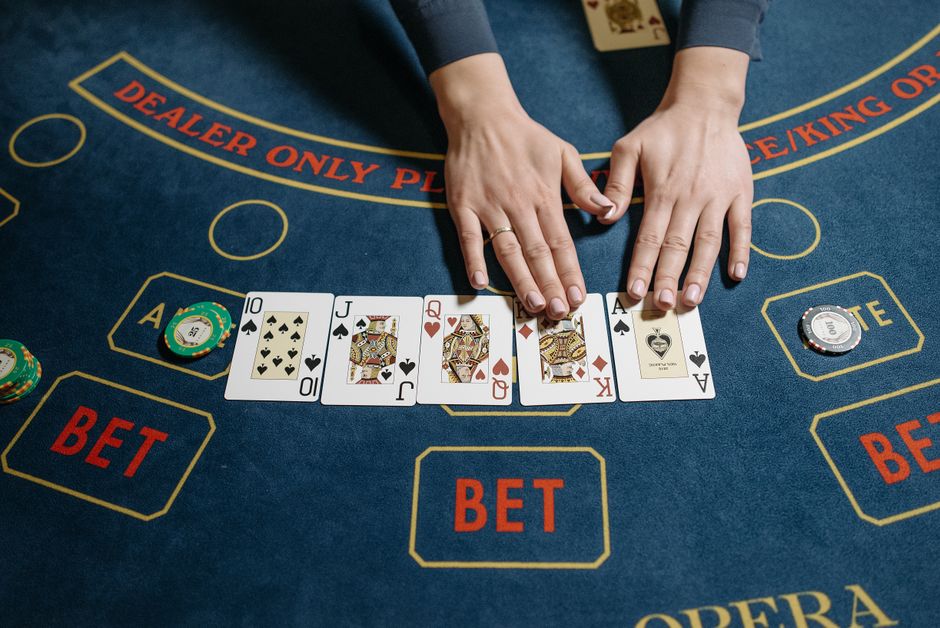
Poker is the odd one out. Slots and sports betting are you versus the house. Poker is you versus other players—and the house takes a rake. That changes everything. You can be the 10th-best player in the world and still lose if the top 9 are at your table. Game selection is more important than card selection.
In 2023, the global online poker market was valued at over $2.5 billion, and it’s growing again after the post-2011 Black Friday crash. But the ecology has shifted. Recreational players are fewer; grinders are sharper. If you’re playing micro-stakes ($0.01/$0.02), expect a mix of drunk tourists and aspiring pros. At $1/$2 and above, assume everyone knows the math.
One underrated tip: review your biggest losing hands each session. Not the bad beats—those are noise. Look at spots where you called a river bet with second pair or bluff-raised a calling station. Those are leaks.
Welcome bonuses are marketing, not free money. A 100% match up to $500 with a 40x wagering requirement means you must bet $20,000 before withdrawing a cent. If the house edge is 4%, you’ll lose $800 on average before clearing it. That’s not a bonus; that’s a trap for the impatient.
That said, some promos are genuinely +EV (positive expected value). Reload bonuses with low wagering (10x or less), free bet tokens, and poker rake races can be profitable if you read the terms. The key is to calculate the effective value: (Bonus amount) minus (Expected loss from wagering). If that number is positive, it’s worth your time. If it’s negative, skip it.
Also, watch for “sticky” bonuses. Some casinos deduct the bonus from your withdrawal. Others let you keep it. The difference is massive. Always read the T&Cs—yes, actually read them.
The house doesn’t panic. It doesn’t chase losses. It doesn’t bet more because it’s “due.” It applies a small edge over millions of hands and lets variance do its thing. You can’t replicate that edge as a player, but you can replicate the discipline. Set limits. Track results. Choose games where you actually have an edge—whether that’s a soft poker table, a 97% RTP slot, or a line-shopping sportsbook. The thrill is real, but the smart money treats iGaming as entertainment with a budget, not a lottery ticket. Do that, and you’ll be ahead of 90% of the crowd—no luck required.